History of Funding
Traditionally, public funds for out-of-school time programs have come from childcare subsidies and federal funding from the federal 21st Century Community Learning Centers, Title IV-B of the Elementary and Secondary Education Act (ESEA). In 2022, like many states, Virginia had no state budget line item to fund Out-of-School Time (OST) Programs.
This became a strategic priority for VPOST to change. Thanks to a tremendous grassroots effort and the partnership with Commonwealth Strategy Group, a government relations firm, VPOST secured $4 Million in American Rescue Plan (ARP) funding to expand Virginia’s 21st Century Community Learning Center program.
This initial $4M ARP investment greatly expanded the number of OST programs in Virginia, helping to reduce the “waitlist gap,” which shows that for every youth who is enrolled in an OST program in VA, four are on a waitlist.
During 2023-2024, this funding led to 13 new OST programs, serving more than 1,500 additional K-12 students across Virginia.
How Did VPOST Respond?
As the American Rescue Plan funds were coming to a close, VPOST spearheaded a new advocacy campaign to secure the first-ever line-item in the Virginia General Assembly budget to fund OST programs. Using the existing infrastructure of the 21st Community Learning Center program via the Virginia Department of Education, VPOST helped secure a bipartisan budget amendment for $5M in dedicated OST funding for 2024-2026 ($3M 2024-2025; $2M 2025-2026).

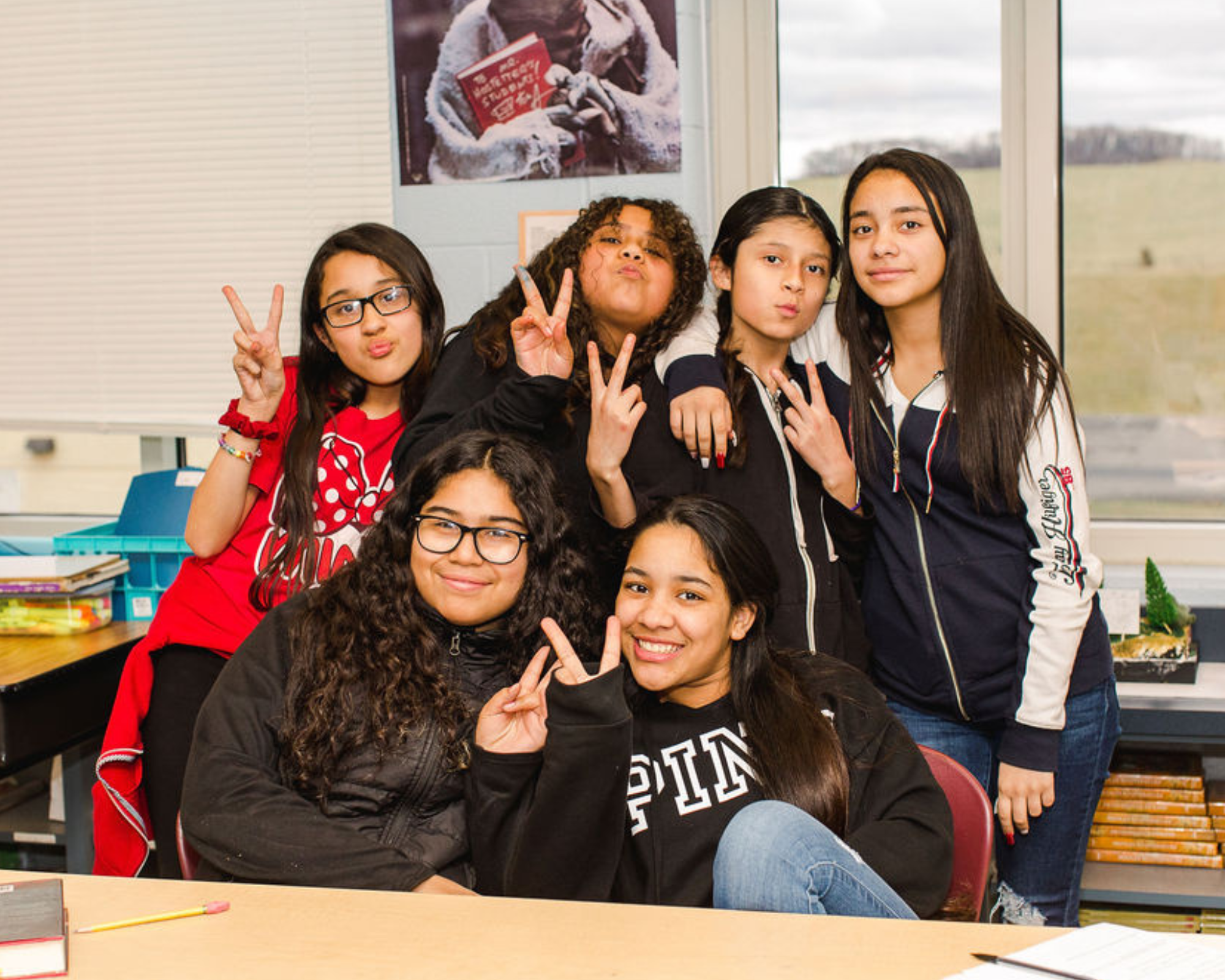

In the first year of the General Assembly-funded program, the $3M investment funded 13 afterschool programs led by nine different Community-Based Organizations (CBOs) across Virginia, resulting in an additional 1,906 K-12 youth served during the 2024-2025 school year. This investment provided a critical new funding stream for CBOs to operate their OST programs and represented a 33% increase in Virginia’s 21st CCLC grant portfolio for that respective year.
2026 News
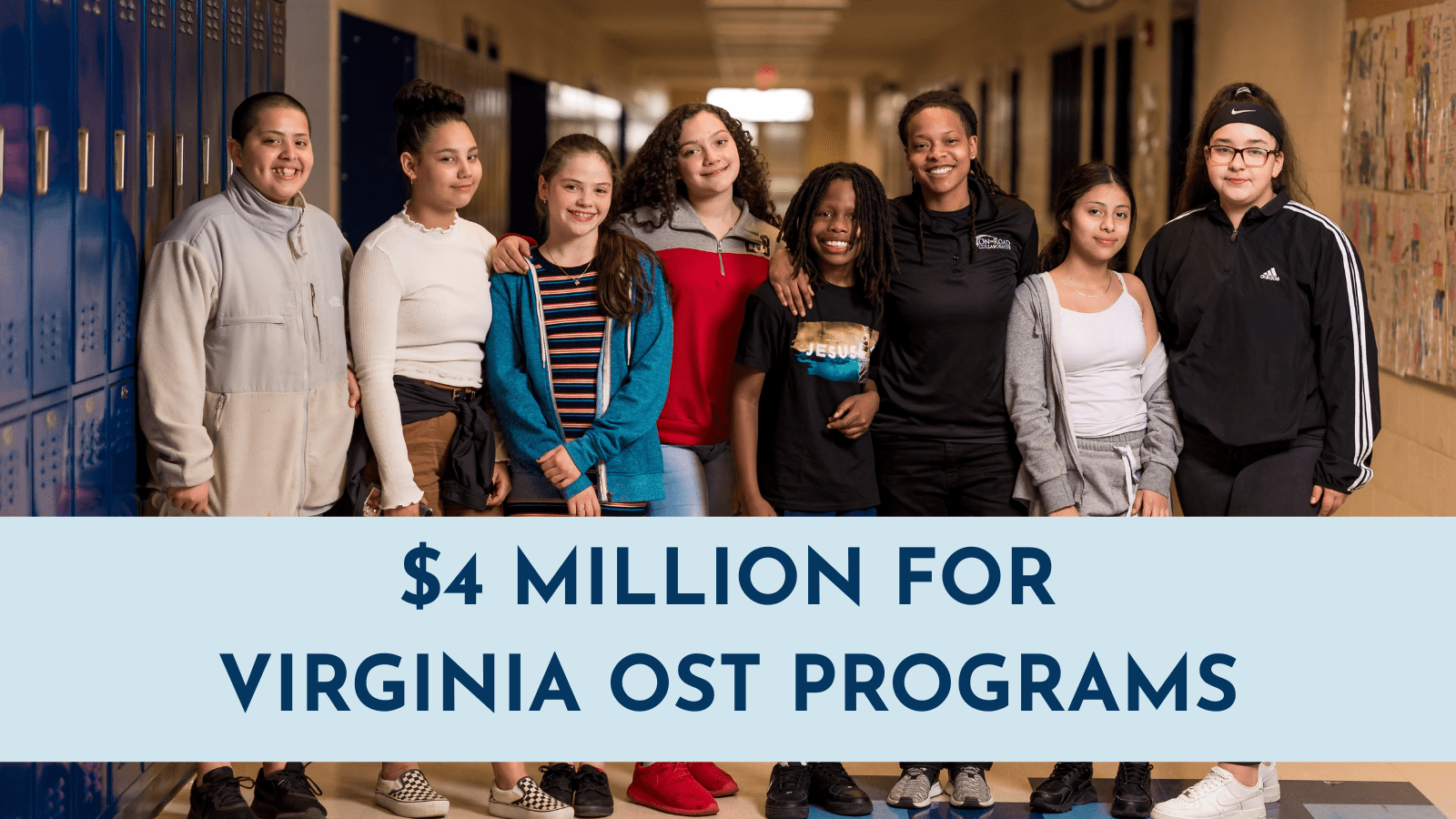
In late June, 2026, the Virginia General Assembly finalized Virginia’s 2026-2028 biennium budget. The budget included a total of $4 million for out-of-school time programs. These funds will be awarded to community-based organizations partnering with school divisions to provide afterschool, before-school, and summer learning programs, providing additional instructional opportunities to combat learning loss for school-age children attending high-poverty, low-performing schools. In this tight budget cycle, sustaining funds for out-of-school time is a huge win!
GAF Program Sites

Grantee Testimonials
Question: How have your GAF grant funds made a difference for your CBO’s budget this past year?
“Allowed us to fully staff our programs, serve more kids, and stay committed to reducing barriers for our families.”
– On the Road Collaborative
“The GAF grant funds have made a significant difference for Higher Achievement’s budget in the past year. Having funding support dedicated to our site has supported our ability to maintain highly qualified staff for our program, bring in additional literary/reading resources, and hire external program partners to enhance the offerings we can give scholars for our weekly elective blocks.”
– Higher Achievement
“Massive! The funds have enabled us to hire more staff, especially much needed tutoring and enrichment specialists from the school we serve. We also have been able to participate in more hands-on activities throughout the year and we’ve been able to visit more and different places on field trips this summer. It’s really helped us to expand upon what is taught during the school day through experiential activities that weren’t possible before due to budget constraints.”
– Boys & Girls Clubs of Blue Ridge
“For Aspire, it allowed us to hire four permanent staff members between two school sites creating less turnover in our team. It has also strengthened our relationship with APS. We’ve been able to serve more students and families. We’ve also strengthened our relationship with the community and both schools. At AHC, they have also been able to open an additional site and expand their community relationships.”
– Aspire


www.tallandsmallphotography.com 


Presidents Day craft at fort Henry. Students turned marsh mellows and sprinkles into Lincolns top hat and Washingtons cherry tree 
Fort Henry Summer Camp – bug hotels, practicing sight words, and bug jeopardy 
First Tee at Fort Henry summer camp 
Books, Bots & Beyond (formerly Dyslexic Edge Academy) launch festival with Dyslexic Edge, IMSE, and Booz Allen Foundation